
Connected monitoring and controlled analysis for real building operations.
ThermoNext connects what a condominium already has — BAS points, meters and rule-based analytics — to detect faults and protect equipment across Toronto and the GTA.
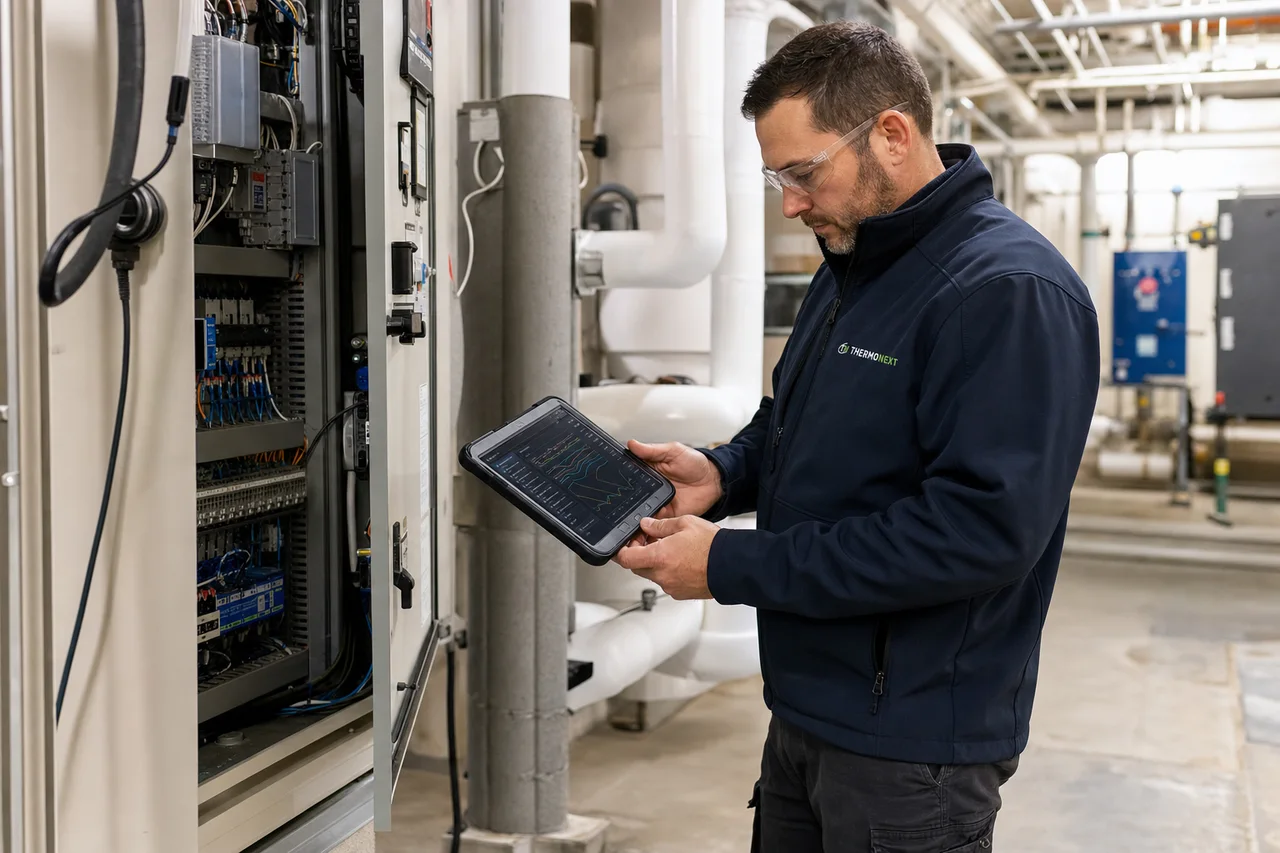
Three layers: the building, the analysis, and the people who act on it.
Data is read from the systems the building already operates, analyzed against defined rules, and reviewed by engineers before anything changes.
What each layer does — and what it deliberately does not do.
Each layer exists to make the engineering better, and each has a boundary it does not cross.
Building systems
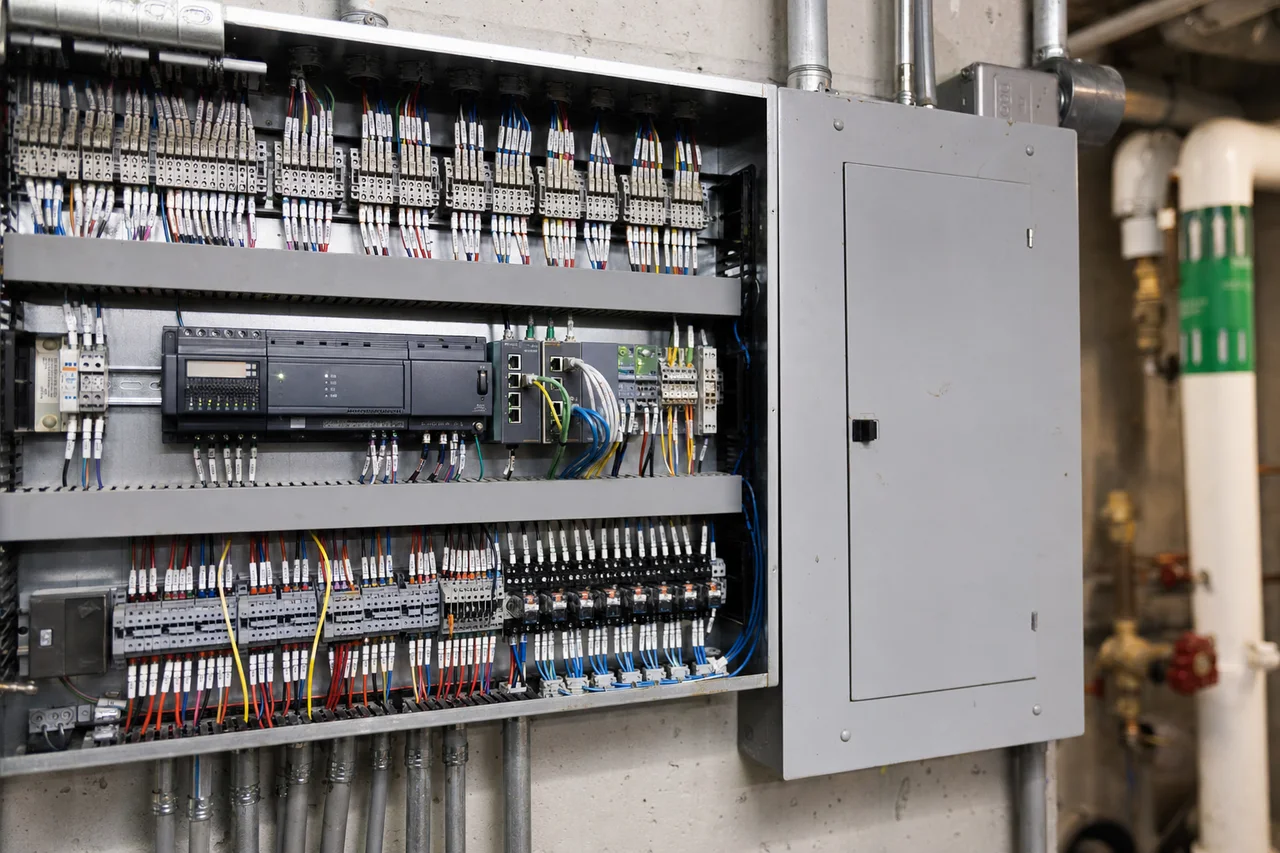
The foundation is the equipment the condominium already owns — monitoring does not require a new BAS.
Analytics and fault detection
Collected trends feed rule-based fault-detection analytics tuned to each building.
Safe action and reporting
Nothing acts on its own — flagged conditions go to an engineer, and every approved change is limited, logged and reversible.
We collect from the systems you have, not the systems a vendor wants to sell.
Most condominium buildings in Toronto and the GTA already have a BAS that records more than anyone looks at.
The first step is an inventory of which points are available and where coverage is thin. Our monitoring is compatible with common BAS platforms, including Niagara, JCI and BACnet systems.
Data sources
- Existing BAS points and trend logs
- Utility billing and interval data
- Portable and temporary metering
- Dedicated sensors
- Equipment status, temperatures and alarms
Five working parts, plainly described.
None of these components is exotic, and none is the point on its own.
The rules that govern how we touch a building.
A BAS controls heating, ventilation and pumping for hundreds of residents; connecting to it is a responsibility before it is a service.
We read before we analyze, and change only what has been approved in writing.
-
5.1
Read first
Every connection begins read-only, observing how the building actually operates before any change is considered.
-
5.2
Approved access
Access is arranged in writing with the property manager and the BAS contractor.
-
5.3
Controlled changes
Changes are limited, logged and reversible.
-
5.4
Human authorization
No rule or alert changes a building system on its own — an engineer reviews, decides and records the authorization.
One principle governs every connection.
Every connection is read-only until management approves a change — and every change is limited, logged and reversible.
Analytics flag conditions; engineers decide.
Start with a clear review of your building.
A preliminary review establishes what your BAS already reports and what a monitored connection would involve — before anything is changed.
Serving Toronto and the Greater Toronto Area.