
Reduce leak and flood exposure before a minor condition becomes a major claim.
ThermoNext helps condominium buildings across Toronto and the GTA improve early detection and reduce water-damage exposure.
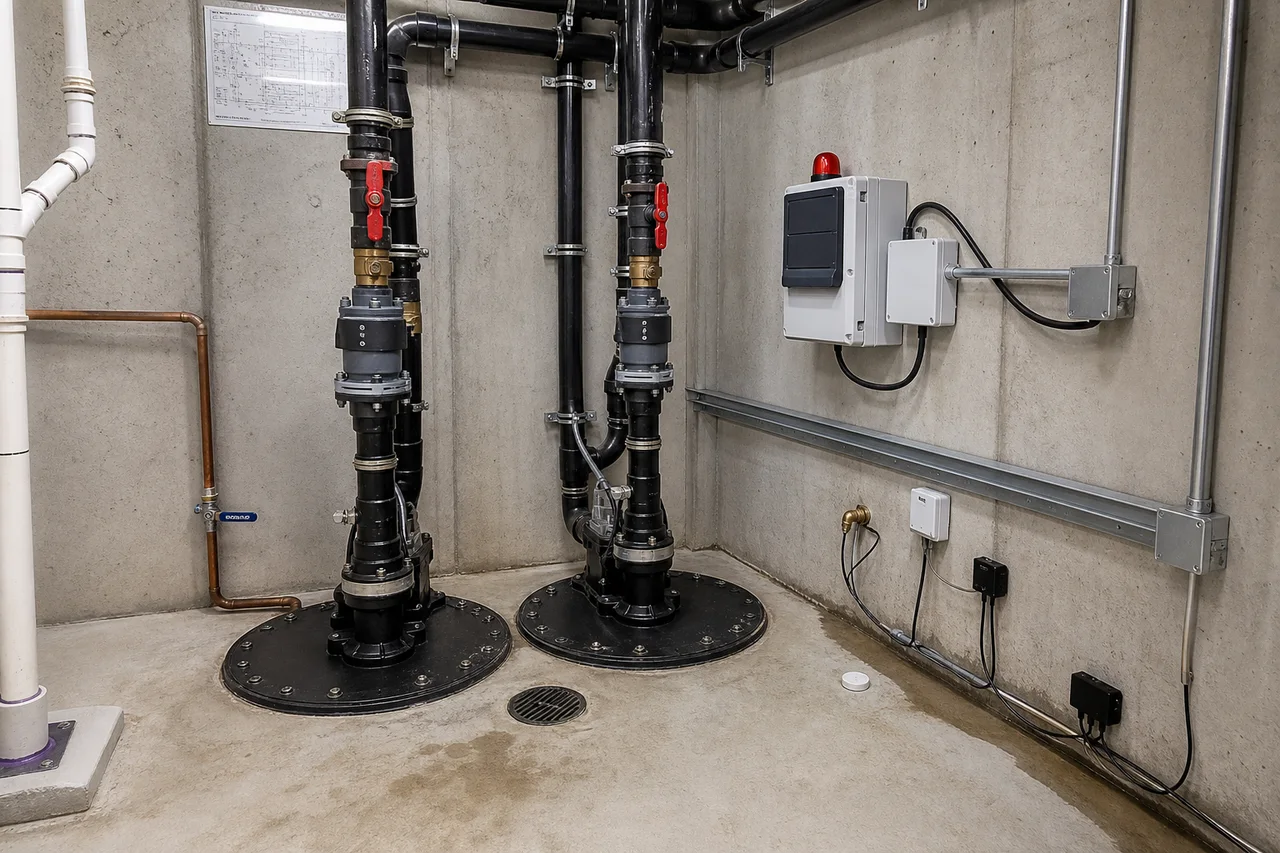
In a high-rise, water finds the fastest path down — and the most expensive one.
A condominium tower concentrates water risk in ways a low-rise building does not.
One failure, many suites
A single riser failure can affect a column of suites at once.
Mechanical rooms concentrate value
Boilers, pumps, electrical gear and BAS panels often share one below-grade space.
Sump pumps fail quietly
The failure is typically discovered during the storm it was meant to handle.
Small leaks run around the clock
A weeping valve shows up only as a slowly rising utility bill.
Alarms nobody receives
Few buildings can say who actually receives each alarm overnight.
Boards need evidence, not assurances
A documented program gives the board something concrete to point to.
The places where water events in condominiums actually start.
Most water losses trace back to a fairly short list of systems and locations.
Pumping systems
- Sump pumps and pits
- Booster pump skids
- Pump status and alarms
- Discharge and check-valve piping
Mechanical rooms
- Domestic hot-water systems
- Boiler and heat-exchanger areas
- Floor drains and drain routing
- High-risk valves and fittings
Distribution
- Risers and branch piping
- DHW recirculation lines
- Isolation-valve condition and access
- Pressure-reducing stations
Entry and below grade
- Main water-entry points
- Below-grade parking and storage
- Drainage and catch basins
- Storm-inflow exposure
Condensate and rooftop
- Condensate drains and pans
- Rooftop mechanical systems
- Cooling equipment and towers
- Makeup-air unit coils
Fire protection
- Sprinkler-line exposure
- Standpipe and valve rooms
- Freeze-exposure points
- Test and drain connections
Assessment, monitoring and response planning as one program.
Hardware alone does not manage water risk.
ThermoNext works as the independent layer that connects the pieces, making sure every alarm ends at a person with a procedure.
Assessment and analysis
- Site water-risk review
- Alarm-coverage review
- Water-flow analysis
- Automatic shutoff review
Monitoring and response
- Sump-pump status monitoring
- Escalation design
- Flood-response planning
- Monthly risk summaries
From risk map to standing program.
The sequence is deliberate: understand the building first, use what already exists, add only what is justified.
-
Identify high-risk areas
Every area where a water event could start, ranked by consequence.
-
Review safeguards and gaps
Existing sensors, alarms and procedures measured against exposure.
-
Improve monitoring and escalation
Gaps closed in priority order, with every alarm routed to someone who can act.
-
Track and report
Open items tracked to resolution and summarized monthly for the board.
What detection and documentation actually look like.
Two working documents anchor the program: the flow record and the flood-risk register.
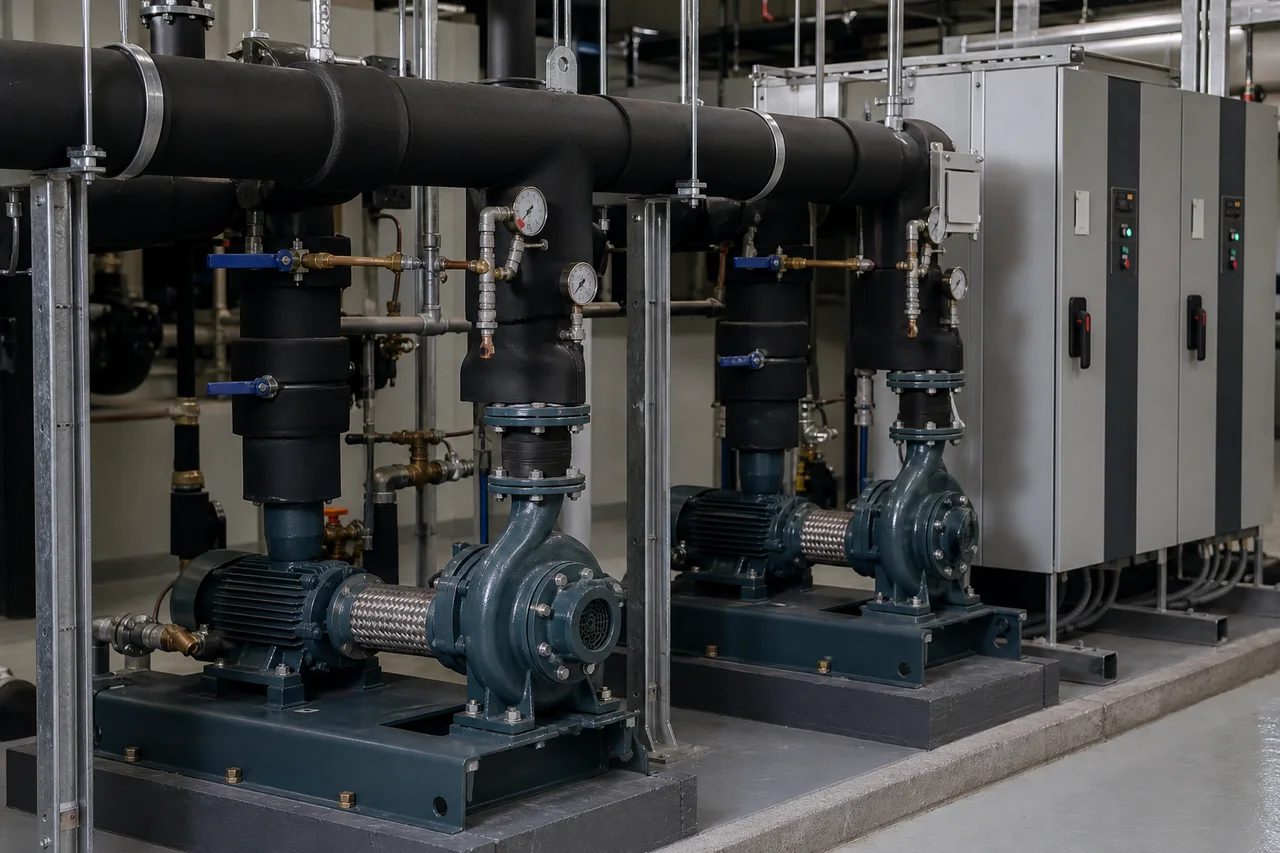
| Area | Exposure | Control status |
|---|---|---|
| Sump pump no. 2, parking level P2 | Storm inflow during peak events | No status alarm at BAS |
| DHW recirculation line, mech. room | Corrosion noted at pump connection | Repair scoped; re-inspection set |
| Booster pump skid | Mechanical-room flooding | Leak sensor added; alarm verified |
| Main water entry | No automatic shutoff on failure | Shutoff options under review |
| MUA condensate pan, roof level | Overflow into ceiling space below | Drain cleared; re-tested |
Documentation the board can put on the table.
Insurers now ask condominium corporations harder questions about water risk; a maintained record — flood-risk register, monitoring coverage, escalation procedures and incident history — gives the board a concrete answer.
ThermoNext does not provide insurance advice and makes no representation about premiums, deductibles or coverage decisions.
Straight answers to the questions boards ask first.
Do you install leak sensors yourselves?
No — ThermoNext plans and specifies the work; licensed contractors install it. We then verify every alarm reaches the right people.
Will this stop every flood?
No — no monitoring program prevents every water event. A well-designed one reduces exposure by finding conditions earlier and shrinking the damage window.
Does this work with our existing BAS?
In most buildings, yes. Where the BAS cannot take a point, standalone sensors or independent alarm paths are used instead.
What does the board receive each month?
A concise water-risk summary: register status, open items by priority, incidents and corrective actions. The format stays consistent month to month.
Start with a clear review of your building.
The preliminary review maps your building’s high-risk water areas and identifies the gaps that matter most.
Serving Toronto and the Greater Toronto Area.